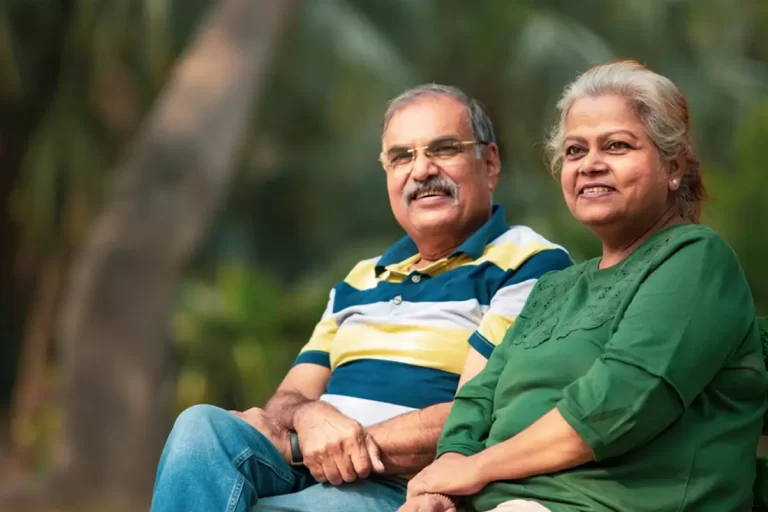


This blog looks at what changes when an older resident moves into a purpose-built senior living community in Mumbai. We cover the daily friction that disappears, the safety features built into these homes, how on-site medical support works in practice, what the social side actually looks like, and what the premium end of the market includes. There is also a section on the questions worth asking during a site visit, along with answers to the queries families raise most often.
Table of Contents
- Why Mumbai Makes This Decision Different
- The Daily Friction That Disappears
- Safety Built Into the Floor Plan
- Healthcare Without the Commute
- Company Without Obligation
- What the Premium Segment Includes
- Questions to Ask on a Site Visit
- Finding a Community That Fits
- Conclusion
- FAQs
Retirement housing in India used to mean moving away from the city, usually to a quieter town where land was cheap, and the family visited twice a year. That model has largely been replaced. Purpose-built communities now sit inside Mumbai and along its immediate periphery, which means residents keep their doctors, their old friends and their children within reach. The appeal of retirement homes in Mumbai is mostly about staying close to a life you have already built while handing over the parts that have become exhausting.
Why Mumbai Makes This Decision Different?
Space is the first thing. A family flat in Dadar or Andheri was designed for four people and a lot of storage. Once the children move out, an older couple is left maintaining rooms nobody enters, paying society charges on square footage they no longer use.
Then there is the vertical problem. Older buildings across the city have lifts that fail, narrow landings and steps with no handrail. Residents who once managed three flights easily find themselves planning their entire day around avoiding them. A single fall on a wet monsoon staircase can end independent living altogether.
Distance is the third pressure. Adult children have scattered to Pune, Bengaluru, Dubai and further. The parent who stays behind in the family flat is often managing everything alone, from the plumber to the pharmacy run.
The Daily Friction That Disappears
The clearest gain from senior living is administrative. Someone else handles the things that have quietly become a full-time job.
- Housekeeping and laundry run on a schedule you set
- Security is staffed around the clock, with visitor screening at the gate
- Power backup, water supply and plumbing repairs sit with the operator
- Meals are available in a dining hall for residents who no longer wish to cook daily
- Transport is arranged for hospital appointments
- Concierge services take care of all your needs
Residents keep their own kitchens and cook whenever they like. The services are there to be used on the days you want them, and skipped on the days you do not.
Safety Built Into the Floor Plan
A standard residential flat is built to general housing specifications, so accessibility features are not part of the fittings. Bathroom doorways are cut to the usual internal door width. Bathroom floors are finished in ceramic or vitrified tile. There is a raised threshold at the bathroom entrance to hold water in. Grab bars, anti-skid surfaces and emergency call points are absent, since they are not standard inclusions. Switches are positioned at the common height of roughly 1.2 metres. In an emergency, the response depends on family members present and the time an ambulance takes to reach the address.
Homes designed for ageing seniors look ordinary at first glance. The differences reveal themselves once you know what you are looking at.
Doorways are wider, so a walking frame or wheelchair passes through comfortably. Bathrooms have anti-skid flooring and grab bars fitted at the proper height near the WC and shower. Thresholds are level, removing the small lips that cause most household trips. Lighting is brighter, and switches sit lower on the wall. Lifts are sized to take a stretcher, which matters once in many years and matters enormously on that day.
Emergency call points in the bedroom and bathroom connect to a staffed desk. Response times inside a community are measured in minutes.
Healthcare Without the Commute
Getting to a hospital in Mumbai is its own ordeal. Communities address this in layers.
Most keep a nurse or paramedic on site through the day and night, capable of handling dressings, injections, vitals monitoring and the early assessment that decides whether something is serious. Doctor visits are scheduled weekly or fortnightly, held inside the campus. Ambulances are available on-site 24/7 so that emergencies can be dealt with urgently.
Medication management is a quieter benefit. Staff can prompt residents on dosage schedules, which matters for anyone managing several prescriptions at once. Physiotherapy sessions are often available on campus, saving a twice-weekly journey across town.
Company Without Obligation
Isolation is the health risk families underestimate. An older adult living alone in a large flat can go days speaking to nobody beyond the watchman.
Communities change the geography of friendship. Neighbours are in a similar life stage, share similar reference points and are around at the same hours. What emerges is unforced: morning walking groups, card sessions after lunch, karaoke evenings, festival celebrations organised by residents themselves.
Activity calendars in the best retirement homes in Mumbai are usually run by resident committees, which is why they reflect genuine interests. Some residents teach classes to one another. Others sign up for nothing at all and simply enjoy having people to nod to on the way to the garden. Both are accepted.
What the Premium Segment Includes?
Luxury retirement homes in Mumbai sit at the upper end of pricing and typically add scale to the shared amenities. Expect larger unit layouts with dedicated help quarters, temperature-controlled swimming pools, well-equipped gyms with trainers who understand older bodies, landscaped walking loops and multi-cuisine dining with dietitian input.
Finishes are higher-specification, with imported fittings and better soundproofing. Concierge desks handle bookings, courier collection and guest arrangements. Some projects include a library, a screening room and a wellness centre offering massage and salon services.
The recurring charge is correspondingly higher. Families weighing this should count what they currently spend on domestic staff, society maintenance, utilities and transport, since a good portion of the monthly fee replaces existing outgoings.
Questions to Ask on a Site Visit
Brochures tell you very little. Visit on a weekday, eat a meal in the dining hall, and speak to residents yourself.
- How long has the care staff been employed here, since low turnover signals a well-run operation
- What happens when a resident’s health needs extra attention? And is the assisted-living policy written down?
- How are maintenance charges revised each year, and what is the mechanism
- Which hospitals hold formal tie-ups, and what is the recorded ambulance response time
- Can family members stay overnight, and are guest suites available for larger visits
Ask to see the resident agreement in full before any payment is discussed.
Finding a Community That Fits
Dosti Primus, developed in partnership with Primus Senior Living, sits within Dosti West County in Balkum, Thane West, a 1.85-acre senior living community carved out of an already established 105-acre integrated township. That matters in practice: residents get purpose-built senior housing without giving up access to the shopping, recreation, and social life that a mature township already has running.
The community offers 2- and 3-BHK residences with senior-specific design built in from the start, anti-skid flooring, grab bars, and 24×7 security, along with a medical emergency nurse station on every fifth floor. Jupiter Hospital is around eight minutes away, and the upcoming Balkum Naka Metro Station will add direct connectivity to the wider Mumbai Metro network once complete.
For families searching for retirement homes in Mumbai but wary of relocating to a place disconnected from the city, a Dosti Primus site visit is worth the drive out to Thane, if only to see how a senior-specific community can sit within a functioning township rather than apart from one.
Conclusion
Most families arrive at this decision after a scare: a fall, a hospital admission, a bad monsoon week alone. Making the move earlier means choosing from a position of strength, settling in while you are still fit enough to enjoy the swimming pool and the walking group. Book a visit, spend half a day, and experience the place firsthand.
FAQs
1. What is the minimum age for moving into a senior living community in Mumbai?
Most operators require one resident of a household to be at least 55 or 60 years of age.
2. Do residents own the flat or lease it?
Both models exist. Some projects sell units outright with a registered sale deed, and others operate on long-term lease or rental arrangements.
3. Are these communities inside Mumbai city limits?
Some are, and many sit along the periphery towards Thane, Panvel and the Mumbai-Pune corridor, where larger campuses are feasible. Travel time to your family and preferred hospital is worth mapping before you decide.
4. What is included in the monthly maintenance charge?
Typically, housekeeping, security, common-area upkeep, power backup and a slew of everyday events and activities. Dining, transport and personal care are often billed separately, so ask for an itemised breakdown.
5. Can my children stay with me during visits?
Yes. Guests can stay in your unit, and most communities also maintain guest suites available for booking when the whole family comes down.